Data Studio Name Returns After 3.5-Year Looker Studio Experiment: Google Reverses Course

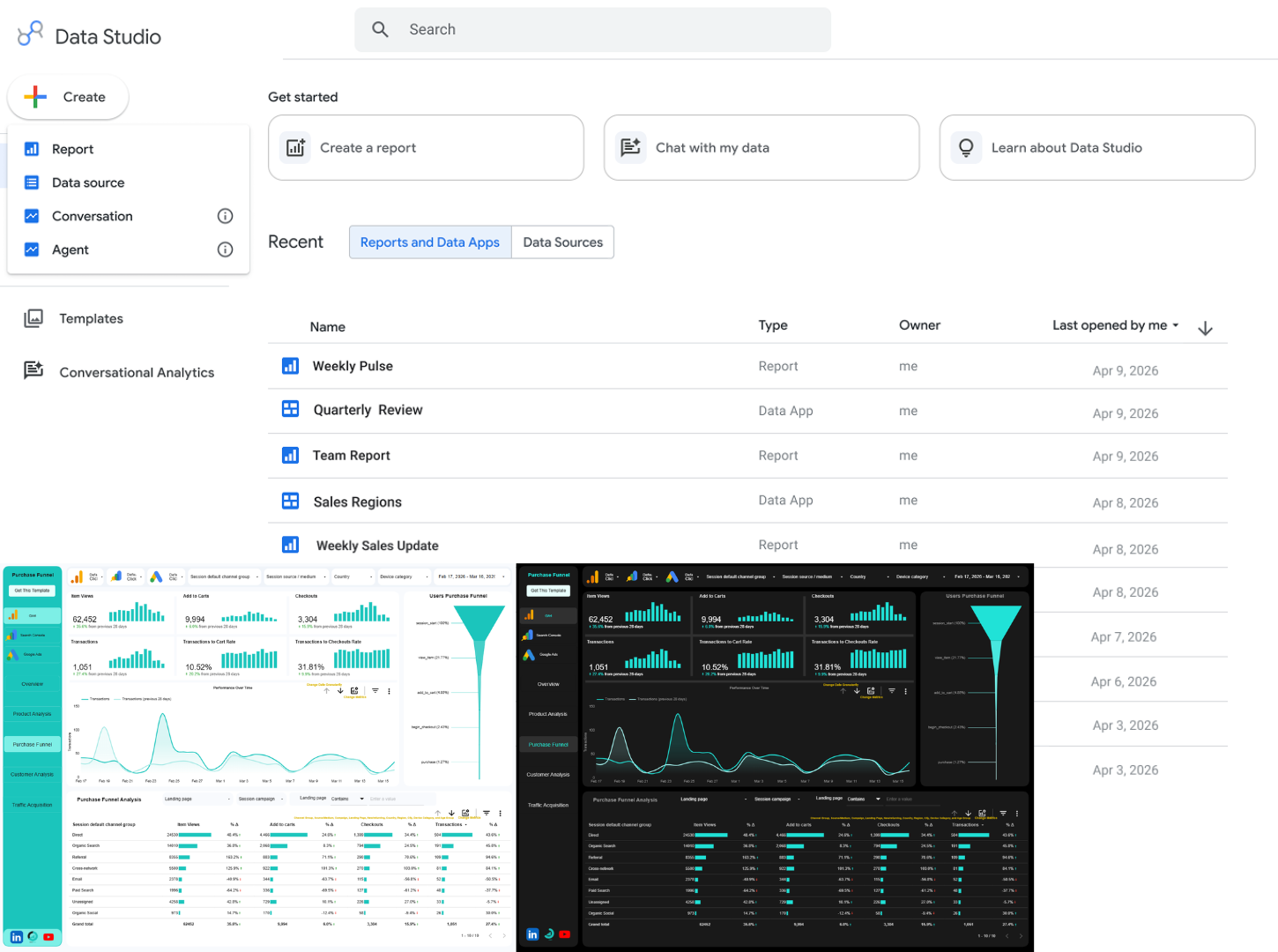
On April 11, 2026, in a surprising strategic reversal, Google announced it’s retiring the “Looker Studio” name and reintroducing Data Studio as the official brand for its lightweight analytics and visualization tool.
The move marks the end of a 3.5-year unification experiment that began on October 11, 2022, and underscores a broader lesson in product naming and market clarity.
The 2022 Unification That Didn’t Stick
When Google rebranded Data Studio to Looker Studio in October 2022, the intention was clear: consolidate the company’s business intelligence portfolio under a single, unified umbrella.
The Looker brand, acquired by Google in 2020, was positioned as the flagship BI platform, with Data Studio absorbed into the “Looker family” of products.
The strategy made sense on paper. Google wanted to position Looker as the enterprise-grade solution while Data Studio would become its lighter, self-service sibling.
A Looker Studio Pro tier was introduced to serve enterprise customers seeking governance and compliance features.
But the market had other ideas.
The Looker Confusion Problem
While Google never explicitly stated confusion as the reason for the reversal, the announcement’s language tells the story.
The company describes Data Studio as a “beloved and familiar name” being “reintroduced”.
The core issue becomes clear: having two products with the “Looker” name created significant market confusion.
When Data Studio became “Looker Studio,” both the enterprise BI platform (Looker) and the self-service analytics tool (Looker Studio) shared the same primary brand name. This created a critical positioning problem:
- For customers: It became unclear which “Looker” product was right for their use case.
- For sales and marketing: Communicating the differentiation between Looker and Looker Studio was unnecessarily complex. Especially when you throw in Looker Studio Pro somewhere in there.
- For the market: The naming made it harder to position two fundamentally different tools in two different tiers.
The unification strategy that looked good on an organization chart proved confusing in the real world. Users didn’t need a unified name, they needed clarity about which tool to choose.
Strategic Differentiation: The Real Winner
Rather than abandoning the unification vision entirely, Google is now executing a smarter strategy: clear product differentiation with distinct names.
The new positioning is straightforward:
- Data Studio: The entry-level, self-service tool for ad-hoc reporting, personal data exploration, and quick visualization across Google’s ecosystem (BigQuery, Google Sheets, Ads)
- Looker: The enterprise BI platform with governed data, semantic models, and agentic AI capabilities.
This separation actually serves customers better by eliminating ambiguity. Users now know exactly which tool to reach for based on their use case rather than trying to navigate a confusing family brand.
What’s Changing (And What Isn’t)
The transition is straightforward because this is fundamentally a naming change.
For users, all existing reports, data sources, and assets will be transitioned with no action required.
Data Studio Pro (formerly Looker Studio Pro) continues to serve scaling teams with enterprise features, AI capabilities, and deep Google Cloud integration for organizations that needs its security, management, and compliance capabilities.
The Broader Lesson
Google’s pivot illustrates a fundamental principle in product strategy: strong brand equity earned over time shouldn’t be discarded lightly, especially when existing users are deeply familiar with it.
The company spent years building “Data Studio” into a widely-recognized tool trusted by a lot of people. Renaming it didn’t make the product stronger, it just added friction.
The good news for users?
Google’s willingness to reverse course shows the company is listening.
And the new two-tier strategy: Data Studio for exploratory analytics and Looker for governed enterprise BI, is actually clearer than what came before.
For organizations invested in either platform, the rebranding represents stability: the tools they’ve built on aren’t going anywhere, and the strategic vision has become sharper, not murkier.
Google will detail the next chapter of its data platform strategy at Google Cloud Next ’26 later this month.
Ready to Get Started with Data Studio?
With the renewed focus on Data Studio for ad-hoc analytics and exploration, now’s the perfect time to build your dashboards and reports the right way.
Data Clare offers pre-built templates and custom Data Studio solutions to help you get insights faster.
Whether you’re migrating from Looker Studio, building your first dashboard, or scaling analytics across your team, we can help.


A Data Studio expert that help e-commerce and marketing teams transform their business data into an actionable Data Studio dashboard that cuts hours of manual reporting and delivers real-time business insights.